Updated 30 September 2026
Dry aged beef is the steakhouse's secret: beef that has been hung in a cold, carefully controlled room for weeks, so it loses moisture, concentrates in flavour and becomes more tender. It's also more expensive, because of the time, space and trimming involved. This guide explains how dry ageing works, how it differs from wet ageing, what it does to the taste, and exactly what dry-aged beef we have on our counter right now.

What is dry aged beef?
Dry ageing means hanging or racking beef, usually on the bone as whole primals such as the rib or loin, in a chilled room with controlled temperature, humidity and airflow. Over the following weeks, two things happen:
- Moisture evaporates from the meat, which concentrates the beefy flavour.
- Natural enzymes in the meat slowly break down muscle fibres and connective tissue, which makes it more tender.
The outside forms a dark, hard crust, which the butcher trims away before cutting the meat into steaks or joints. That trimming, plus the weight lost to evaporation, is a big part of why dry aged beef costs more.
How long is beef dry aged?
There's no single rule. Commonly quoted ranges are:
- Around 21–28 days: noticeably more tender, with a deeper beef flavour. The most common range.
- Around 35–45 days: more concentrated, with nutty, savoury notes.
- 60 days and beyond: intense, sometimes described as funky or blue-cheese-like. A specialist taste.
Longer isn't automatically better; it's a matter of preference, and the loss in weight grows the longer the beef is aged.
Dry ageing vs wet ageing
| Dry ageing | Wet ageing | |
|---|---|---|
| How | Unwrapped, in a controlled chilled room | Vacuum-packed in its own juices |
| Weight loss | Significant (evaporation and trimming) | Very little |
| Flavour | Concentrated, nutty, savoury | Cleaner, milder, "fresher" beef flavour |
| Tenderness | Improves | Improves |
| Cost | Higher | Lower |
Most beef sold in the UK is aged in some way. When a steak is described simply as "aged", it can mean either method, so check the description if dry ageing matters to you.
What dry-aged beef is on our counter
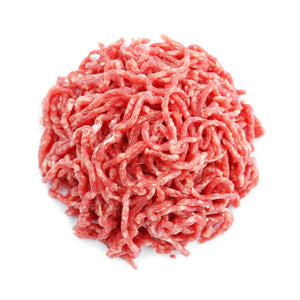
We want to be straight with you. At the moment, the dry-aged product on our live counter is our 1kg Dry Aged Smashed Burger Beef Mince (£12.99). It's dry-aged beef mince, seasoned with salt and pepper, made for smashed burgers, and it's also great in bolognese, chilli and lasagne. It's sent frozen, so thaw it fully in the fridge before cooking.
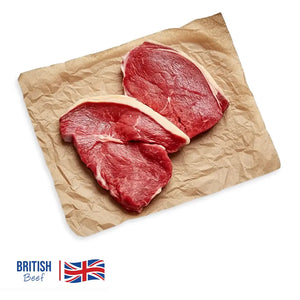
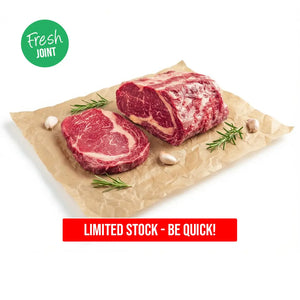
Our steaks and joints are prepared by our butchers and described as aged for flavour on their product pages, but we don't currently sell dry-aged steaks. When we do, they'll be clearly labelled.
How to cook dry aged beef mince
Because dry-aged mince has such a concentrated flavour, it shines when kept simple.
- Smashed burgers: roll into 100g balls, smash onto a smoking-hot pan, cook for 2 minutes, flip, add cheese, and cook for another minute. Full method: smashed burger recipe.
- Bolognese or ragù: brown it hard in batches for maximum flavour.
- Meatballs: the seasoning is already in.
Like all mince, it must be cooked until steaming hot throughout, with no pink meat and clear juices (FSA guidance).


Is dry aged beef worth it?
For a special-occasion steak or rib of beef, many people think so: the flavour and texture are noticeably different. For everyday cooking, well-aged, well-cooked beef is excellent. If you're trying dry-aged for the first time, a burger made with dry-aged mince is a very affordable way to taste the difference.
How to cook a dry aged steak
If you buy dry-aged steak elsewhere, cook it as you would any good steak, but a touch quicker: it has less moisture, so it browns faster. A very hot pan, frequent turning, a butter baste and a full rest. Don't take it beyond medium or you lose what you paid for. See how long to cook steak.
How to spot dry aged beef
- Colour: darker, deeper red to burgundy meat than fresh beef.
- Texture: firmer and slightly drier to the touch.
- Label: a proper dry-aged product usually states the method and the number of days.
- Price: noticeably higher per kg than wet-aged beef of the same cut.
- Smell: rich and savoury, never sour.
Can you dry age beef at home?
Home dry-ageing kits and special bags exist, but proper dry ageing needs precise temperature, humidity and airflow control, and a whole primal cut, not individual steaks. For food safety, we'd recommend leaving it to professionals.
More beef guides
- Types of steak: a butcher's guide
- Aberdeen Angus beef: what the name means
- Minced beef: lean, steak and burger mince
Browse beef mince, beef burgers and all steaks.
Shop the cuts in this guide


How we pack your order
Your order is packed at our butchery at St Stephen, near St Austell, in a double-walled box with a sealed thermal liner and gel ice packs, then delivered by DPD next-day on the day you choose. Free delivery over £85.
 Extra strong boxWhite double-walled corrugated cardboard
 Thermal linerAir-infused, padded and sealed
 Gel ice packsRecyclable film, non-toxic food-grade gel
 DPD deliveryOn the day you choose
Dry aged beef FAQs
What does dry aged beef taste like?
More concentrated and beefier than fresh beef, often with nutty, savoury notes. Longer-aged beef can taste more intense.
How long is dry aged beef aged for?
Commonly 21–28 days, and sometimes 35–60 days or more for a more intense flavour.
Why is dry aged beef so expensive?
It takes weeks of space in a controlled room, loses weight through evaporation, and needs its outer crust trimming away before it can be sold.
What's the difference between dry aged and wet aged beef?
Dry-aged beef is aged unwrapped in a controlled room and loses moisture. Wet-aged beef is aged in a vacuum pack and keeps its moisture, giving a milder flavour.
Do you sell dry aged steaks?
Not at the moment. Our dry-aged product is the 1kg dry-aged smashed burger beef mince. Our steaks are described as aged for flavour on their product pages.