Updated 30 September 2026
Quick answer: UK safe core temperatures: poultry, minced meat, burgers and sausages should be cooked to 75°C (or 70°C held for 2 minutes). Whole cuts of beef and lamb can be served to taste: about 50°C rare, 55–57°C medium-rare, 60–63°C medium, 70°C and above well done.
A probe thermometer is the most useful tool in a meat cook's kitchen. It takes the guesswork out of roasts, steaks and chicken, and it's the only reliable way to know that food is both safe and not overcooked. This guide gives the beef internal temperature for every doneness, a full core-temperature chart for lamb, pork, chicken, gammon and mince, and the UK food-safety guidance behind it.

The UK food-safety rule
The Food Standards Agency (FSA) says that poultry, pork, burgers, sausages, kebabs and rolled joints should be cooked until they're steaming hot throughout, with no pink meat, and the juices run clear. When using a thermometer, the FSA's benchmark is 70°C for 2 minutes in the centre, or an equivalent such as 75°C for 30 seconds or 80°C for 6 seconds.
Whole cuts of beef and lamb, such as steaks, joints and chops, are different: bacteria live mainly on the surface, so once the outside is properly seared, they can be served pink or rare in the middle.
Beef internal temperature chart
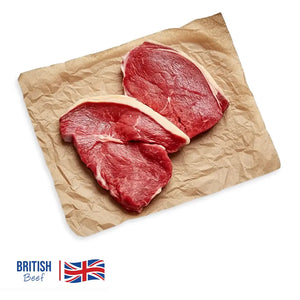
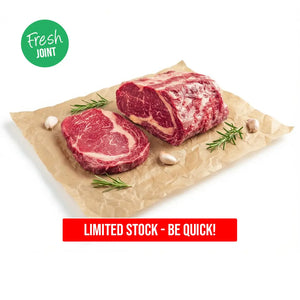
For whole cuts of beef (steaks and roasting joints):
| Doneness | Take it off the heat at | After resting | Looks like |
|---|---|---|---|
| Blue | about 45°C | about 46–48°C | Deep purple-red, barely warm |
| Rare | about 48–50°C | about 50–52°C | Red, cool-ish centre |
| Medium-rare | about 52–54°C | about 55–57°C | Warm red-pink |
| Medium | about 57–58°C | about 60–63°C | Pink |
| Medium-well | about 63–65°C | about 65–68°C | A trace of pink |
| Well done | about 68°C | 70°C+ | No pink |
These are the usual ranges used by chefs and in thermometer guides. For roasting times to go with them, see roast beef cooking times per kg.
Slow-cooked beef (brisket, chuck, short ribs) is different again: it's cooked well past well done, to around 90–95°C, where the connective tissue melts and it becomes tender.
Minced beef and burgers must be cooked through: 70°C for 2 minutes, steaming hot, no pink.
Lamb
| Doneness | After resting |
|---|---|
| Pink (medium-rare) | about 55–60°C |
| Medium | about 60–65°C |
| Well done | 70°C+ |
| Slow-cooked shoulder or shanks | about 85–95°C, until tender |
Whole cuts of lamb can be served pink. Minced lamb, lamb burgers and rolled lamb joints should be cooked through. See how to cook a leg of lamb in the oven.
Pork
| Cut | Target |
|---|---|
| Loin joint, chops, steaks | 70°C for 2 minutes |
| Shoulder (sliced roast) | 80°C+ |
| Pulled pork | 90–95°C |
| Belly | 80°C+ |
| Sausages and pork mince | 70°C for 2 minutes |
UK guidance is to cook pork until there's no pink meat. See pork internal temperature for more.
Chicken
| Cut | Target |
|---|---|
| Chicken breast | 70°C for 2 minutes (many cooks use 75°C) |
| Thighs, drumsticks, wings | 75°C+, often nicer at 80°C+ |
| Whole bird | 75°C in the thickest part of the thigh |
Chicken must always be cooked through: steaming hot, no pink, clear juices. See how to cook chicken breast in the air fryer.
Gammon
Gammon is raw cured pork, so cook it to 70°C for 2 minutes. It stays pink when cooked because of the cure, so go by temperature and clear juices, not colour. See how to cook a gammon joint.


How to use a meat thermometer
- Probe the thickest part, in the centre, away from bone and fat, which read differently.
- Check in more than one place on large joints and whole birds.
- Allow for carryover. Roasts keep cooking as they rest, often rising a few degrees, so take them out a little before the target.
- Rest, then re-check if you're close to the safety line with pork, chicken or rolled joints.
- Clean the probe between checks, especially when moving from raw to cooked meat.
Choosing a meat thermometer
You don't need an expensive one. A basic digital instant-read probe does the job for steaks, chops and chicken. For roasts, a leave-in probe with a cable and an alarm is handy: you set the target temperature and it beeps when the joint is ready, so you never have to open the oven. Check its accuracy now and then by putting the tip in a glass of iced water, where it should read close to 0°C.
Why resting matters
Resting lets the juices settle back through the meat, so they don't run out on the board. It also lets the temperature even out and, in big joints, finish rising. Rest steaks for about half their cooking time and joints for 20–30 minutes, loosely covered.
Reheating
Reheat cooked meat until it's steaming hot all the way through, and only reheat it once. Cool leftovers quickly and refrigerate them within 1–2 hours.
More temperature guides
- How long to cook steak: rare to well done
- Roast pork cooking times per kg
- How to cook a topside joint
Browse beef joints, our Sunday roast range and all steaks.
Shop the cuts in this guide


How we pack your order
Your order is packed at our butchery at St Stephen, near St Austell, in a double-walled box with a sealed thermal liner and gel ice packs, then delivered by DPD next-day on the day you choose. Free delivery over £85.
 Extra strong boxWhite double-walled corrugated cardboard
 Thermal linerAir-infused, padded and sealed
 Gel ice packsRecyclable film, non-toxic food-grade gel
 DPD deliveryOn the day you choose
Meat cooking temperature FAQs
What internal temperature should beef be?
For whole cuts, about 50–52°C for rare, 55–57°C for medium-rare, 60–63°C for medium and 70°C+ for well done, after resting. Minced beef must reach 70°C for 2 minutes.
Is it safe to eat rare beef?
Whole cuts of beef, like steaks and joints, can be served rare once the outside is properly cooked. Burgers and mince must be cooked through.
What temperature is chicken cooked at?
The FSA benchmark is 70°C for 2 minutes, steaming hot, with no pink meat and clear juices. Many cooks take thighs higher for better texture.
What temperature should pork be cooked to in the UK?
70°C for 2 minutes, with no pink meat and clear juices. Shoulder and belly are nicer taken higher.
Where do you put a meat thermometer?
In the thickest part of the meat, in the centre, avoiding bone and fat.
What temperature should meat be cooked to?
75°C for poultry, mince and sausages; whole beef and lamb cuts to your preferred doneness.
What temperature should lamb be cooked to?
About 60°C for pink, 65–70°C for medium-well; slow-cooked shoulder is cooked well beyond that until it pulls apart.