Updated 30 September 2026
Minced beef is the hardest-working thing in most British freezers. Bolognese, chilli, cottage pie, lasagne, burgers and meatballs all start with it. But not all minced beef is the same: the cut it's made from and how much fat it contains change how it cooks and tastes. This guide explains the difference between lean mince and burger mince, what the fat percentages mean, how to cook and freeze minced beef, and which of our packs to buy.

Lean minced beef vs burger mince
| Mince | Approx. fat | Best for | Our pack |
|---|---|---|---|
| Lean beef mince | about 10% | Bolognese, chilli, cottage pie, lasagne, meal prep | Lean Beef Mince 400g |
| Dry-aged smashed burger mince | higher fat, seasoned | Smash burgers, meatballs, rich ragù | 1kg Dry Aged Smashed Burger Beef Mince |
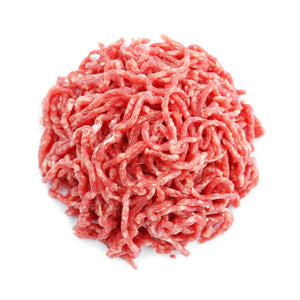
Lean mince is our everyday choice. At roughly 10% fat it browns well without leaving a pool of fat in the pan, so there's no need to drain it, and it holds its texture in sauces. It is the mince we reach for for family dinners and meal prep.
Burger mince needs more fat. Fat is what keeps a burger juicy on a hot griddle, so our 1kg Dry Aged Smashed Burger Beef Mince (£12.99) is made for burgers: dry-aged for extra flavour and already seasoned with salt and pepper. Roll it into balls and smash it onto a hot plate. See our smash burger recipe.
What the fat numbers mean
Supermarket mince is often labelled 5%, 10%, 15% or 20% fat. As a rough guide:
- 5% fat: very lean. Good for calorie counting, but it can be dry and crumbly. Add a splash of stock or cook it in a sauce.
- 10% fat: the sweet spot for most cooking. Enough fat for flavour, lean enough not to need draining. This is where our lean beef mince sits.
- 15–20% fat: rich and juicy. Best for burgers, meatballs and slow ragù; pour off some of the fat after browning for sauces.
Which pack of minced beef should you buy?
- One meal for 3–4: Lean Beef Mince 400g (£7.49).
- Two meals, or a big batch: Fresh Lean Beef Mince - 2x 400g (£14.99).
- Fill the freezer for the week: Fresh Lean Beef Mince - 5 x 400g (£36.99), five 400g packs you can freeze separately.
- Burger night: 1kg Dry Aged Smashed Burger Beef Mince (£12.99).
As a rough guide, 400g of minced beef feeds 3–4 in a sauce such as bolognese or chilli, or makes 4 generous burgers.


Cooking minced beef
- Get the pan hot. Use a wide frying pan over a medium-high heat with a little oil.
- Don't crowd it. Brown 400–500g at a time. Too much mince in the pan stews it grey instead of browning.
- Leave it alone. Press the mince flat and let it colour for 2–3 minutes before breaking it up. Browning is where the flavour comes from.
- Then build the sauce. Add onions, garlic and so on once the mince is browned.
- Cook it through. Minced beef must be cooked until it's steaming hot throughout, with no pink meat, and the juices run clear. This is FSA guidance, because bacteria from the surface are mixed through mince.
For step-by-step recipes, see how to cook lean beef mince, beef mince spaghetti bolognese, cottage pie and chilli con carne. Our homemade beef burgers use the burger mince.
Frozen minced beef
Mince freezes very well, which is why buying in bulk makes sense.
- Freeze it flat. Press each pack flat in a freezer bag before freezing. It stacks neatly and thaws in a few hours.
- Label and date it. Frozen mince keeps its best quality for about 3–4 months.
- Thaw in the fridge, overnight or for a day, and cook within 24 hours of thawing.
- Cooking from frozen is possible in a sauce, but thawing first gives a better brown and more even cooking.
Some of our mince, such as the burger mince, is sent frozen and arrives at least partially defrosted. Thaw it fully before cooking.
Is minced beef healthy?
Lean minced beef is a good source of protein, iron, zinc and vitamin B12. The NHS advises that people who eat more than 90g of red and processed meat a day should cut down to 70g, so choose lean mince and bulk it out with vegetables and beans. For how mince compares with chicken on protein, see how much protein is in chicken breast.
Buying mince online from a butcher
Our mince is packed at our butchery in Cornwall and sent in a cold box. Weekday UK delivery is free over £85 (£6.95 under), with no minimum order. Browse all beef mince, lean beef mince and the full beef range.
Shop the cuts in this guide


Cuts we don't stock right now: lamb mince, pork mince, chicken mince or turkey mince (each page shows the closest cuts we do stock).
Related guides: 15 easy beef mince recipes.
How we pack your order
Your order is packed at our butchery at St Stephen, near St Austell, in a double-walled box with a sealed thermal liner and gel ice packs, then delivered by DPD next-day on the day you choose. Free delivery over £85.
 Extra strong boxWhite double-walled corrugated cardboard
 Thermal linerAir-infused, padded and sealed
 Gel ice packsRecyclable film, non-toxic food-grade gel
 DPD deliveryOn the day you choose
Minced beef FAQs
What's the difference between lean mince and regular mince?
Lean mince has less fat, usually around 5–10%, while regular or burger mince is typically 15–20%. Lean suits sauces; higher-fat mince suits burgers and meatballs.
How much fat is in your lean beef mince?
Our lean beef mince is approximately 10% fat.
How long does minced beef take to cook?
About 8–10 minutes to brown in a hot pan, then as long as your sauce needs. It must be steaming hot throughout with no pink.
Can you freeze minced beef?
Yes. Freeze it flat in bags for up to about 3–4 months for best quality, and thaw it in the fridge.
How much minced beef per person?
About 100–125g per person in a sauce, or 150–170g for a burger.