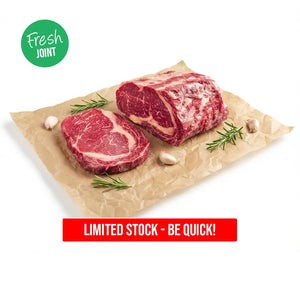
Ribeye is often called the butcher's choice, and marbling is the reason. This short video pans along a row of raw ribeye steaks, so you can see the fat running through each one before it's cooked.

What is marbling?
Marbling is the thin streaks of fat inside the muscle, not the fat around the edge. When the steak cooks, that fat melts into the meat, which is why a well-marbled ribeye eats juicy and full of flavour. It also explains why ribeye is a good choice if you like your steak cooked more: the fat stops it drying out.
What to look for
- Fine, even streaks spread across the face of the steak, rather than one or two thick lumps.
- The eye of fat: most ribeyes have a seam or pocket of fat near the centre. It renders down during cooking and is a big part of the flavour.
- Colour: red meat with creamy-white fat. A darker red in vacuum packs is normal and brightens once the pack is opened.
- Even thickness across the steak, so it cooks at the same rate all over.
Cooking a marbled ribeye
- Bring it out of the fridge 20 to 30 minutes before cooking and pat it dry.
- Season with salt and pepper. Good marbling doesn't need much else.
- Sear in a very hot pan. A 6oz ribeye about 2cm thick takes 2 to 3 minutes a side for medium-rare (55°C in the centre).
- Hold the fat edge against the pan for a minute to render and crisp it.
- Rest for 5 minutes before slicing.
More timings are in how to cook ribeye steak. If you're comparing cuts, read rump, sirloin or ribeye.
Buying in bulk
Ribeye freezes well in its vacuum packs. Defrost it overnight in the fridge and it cooks just like fresh. Our multi-packs, the 10x 6oz and 8x 6oz, are an easy way to keep steak night stocked.